
Mountain gorillas are one of conservation’s rare success stories. Census results from 2015–16 and 2018–19 put the combined population at a minimum of 1,063 across two habitats, the Virunga Massif and the Bwindi–Sarambwe ecosystem. The challenge now is space. Both habitats are ringed by some of the most densely farmed land in Africa, and a growing gorilla population needs somewhere to go.
Sam Wenger, founder of the Africa travel agency RefinedRoutes, has just returned from Uganda and Rwanda, where he stayed at three lodges that are answering that question on their own land: Asilia’s Erebero Hills on the edge of Bwindi, and Wilderness Bisate and Singita Kwitonda beside Volcanoes National Park.
Featured image credit: Asilia Africa.
“For years the conversation around gorillas was about poaching, and that vigilance hasn’t gone anywhere,” says Wenger, a Swiss-trained hotelier with more than 25 years in hospitality and African travel. “What struck me on this trip is how much of the conversation has now moved on to land. At these lodges the conservation work isn’t something running alongside the business, because the land they stand on is the project.”
From tea plantation to forest
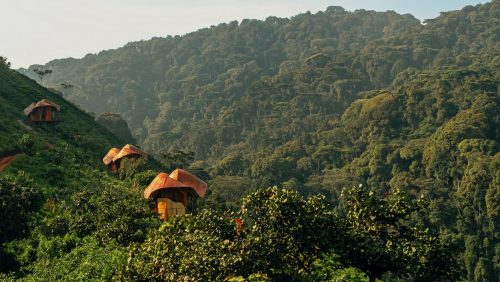
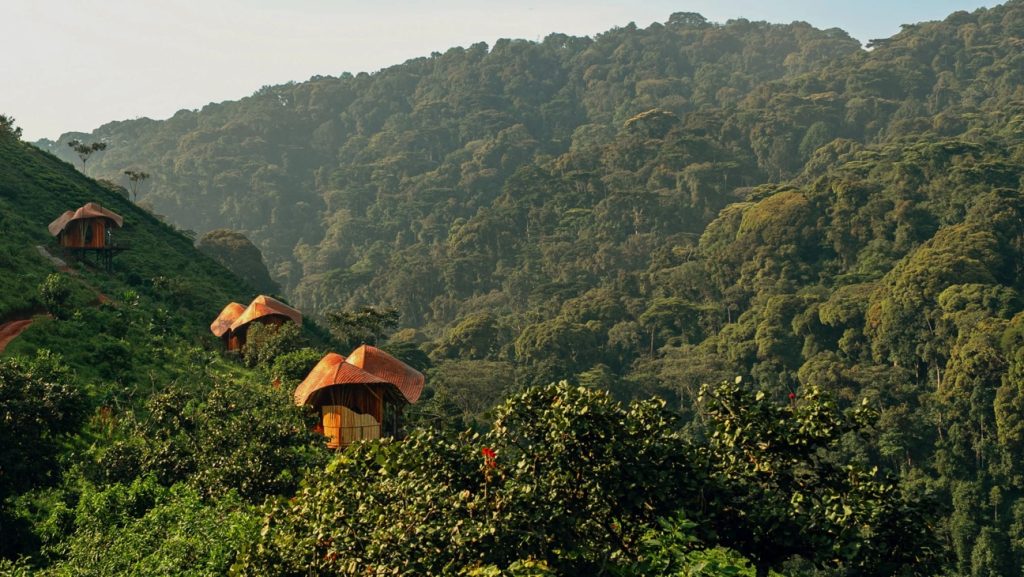
Erebero Hills opened in August 2026 on the northern fringe of Bwindi, close to the park’s Ruhija sector in Uganda, on hills that until recently were covered in tea. Working with its community partner Change a Life Bwindi, Asilia reports that it has restored more than 100 acres in two years, planting some 113,000 indigenous trees across 56 species, with a target of around 400 acres. The team says the land was once among the area’s worst for poaching, and that the partnership has given the surrounding community a direct stake in protecting it.
The species were not chosen from a textbook. The Batwa, an indigenous people who lived as hunter-gatherers in the forest for generations, know it better than anyone, and their elders guided which trees should go back into the ground, favouring those that give birds a habitat, gorillas food and the Batwa the medicine they once gathered inside the forest.
The people the park left out
That knowledge came close to being lost. When Bwindi became a national park in the early 1990s, the Batwa were moved out of the forest with little in the way of compensation or resettlement. “The government protected the gorillas, but not the indigenous people,” as the Change a Life Bwindi team put it.
The Change a Life Bwindi team says the project draws on knowledge shared by local Batwa families, including oral traditions passed down through generations. “When you lose your culture,” they say, “you lose your identity.”
That thinking shapes one of the project’s most striking elements, a living pharmacy planted with traditional healers. The team says it has identified 20 tree species used in Batwa traditional medicine and is replanting them in a garden intended for Batwa ownership. Every tree carries a cultural or medicinal story, and every one that grows outside the park takes a little pressure off the forest the gorillas depend on.
Paid, not donated
Asilia has funded a mushroom house, beehives and bee suits, and a rabbit-farming project for local households, and the lodge then buys the mushrooms and honey these projects produce, so the investment becomes an ongoing income rather than a one-off donation, while local crafts and products are sold in the lodge shop. Around 200 families are now involved in the project’s conservation, empowerment and education work, about 150 people from the community are employed each day, and participating households contribute land and labour in return. The more guests the lodge welcomes, the further the project reaches.
“I’ve seen a lot of community projects over the years, and the ones that last are the ones where local people have a real say,” says Wenger. “Here they share a seat at the table, and a guest’s stay feeds straight into the forest, the families and the medicine garden.”
Rwanda: planting the park’s future edge
Across the border, Volcanoes National Park faces the same squeeze. The Rwandan government is preparing to expand the park by around 23 percent, adding roughly 3,740 hectares, and the first phase is under way, including a new village for families who will relocate from the expansion area. Wilderness Bisate and Singita Kwitonda both sit on the park’s edge, and both teams told Wenger that they expect their land to fall within the expanded park.
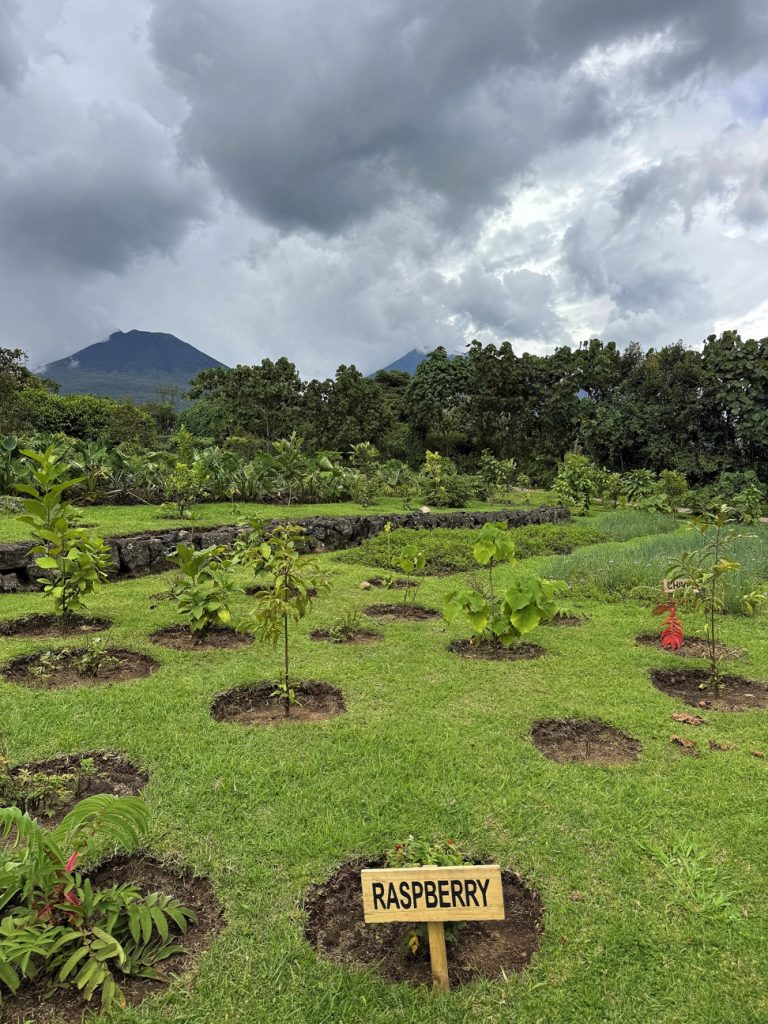
Bisate was built on former farmland, and Wilderness reports that more than 120,000 indigenous trees have been hand-planted there since it opened, many raised in its large nursery and in a community nursery run by the local Tuzamurane cooperative. Guests are invited to plant a sapling of their own before they leave, and Wenger did exactly that.
“Our guide logged the GPS coordinates of the tree we planted, so we can check on it whenever we like,” says Wenger. “One day it should be standing inside a national park, which is a very different thing from offsetting a trip, because you’re adding to the habitat the animals you came to see are going to need.”
Singita reports that more than 250,000 indigenous trees and shrubs have been replanted at Kwitonda across the 72-hectare property, with saplings raised at the lodge’s Akarabo nursery, where guests can also plant a tree. Alongside it, a large kitchen garden supplies much of the fresh produce served at the lodge, and lunch can be served farm to table in the nursery itself, so what grows on the land ends up on the plate.
Nearby in Kinigi, Wenger also visited the Gorilla Guardians Village, founded in the mid-2000s by Edwin Sabuhoro, a former park employee who persuaded local poachers to put down their snares and share their culture with visitors instead. Many of the men who once hunted in the park now welcome guests into a traditional village with music, dance and stories of how families on the forest edge have lived for generations. For the community, the forest is now worth more protected than poached.
An hour with the family
From Erebero Hills, Wenger trekked to the Bitukura family in Bwindi’s Ruhija sector, a group of 13 including babies and three silverbacks living peacefully under one dominant male, an unusual arrangement that has earned the family its reputation as one of Ruhija’s calmest.
“You spend that hour with them and the land question suddenly makes sense,” says Wenger. “My advice is to leave time in the itinerary to see the reforestation work. Most guests come for one hour with the gorillas, and the forest being planted around them is what gives that hour a future.”
Gorilla Habitat: Frequently Asked Questions
How many mountain gorillas are there?
The 2015–16 and 2018–19 censuses counted a combined minimum of 1,063 in the Virunga Massif and Bwindi–Sarambwe. A new Bwindi–Sarambwe census was launched in 2025. Numbers have risen steadily since the 1980s, which is why space has become the main constraint.
Who are the Batwa?
The Batwa are an indigenous forest people who lived in Bwindi and the surrounding forests for generations before the area became a national park in the early 1990s. Projects such as the one at Erebero Hills are designed to restore some of their access to the plants and knowledge tied to the forest.
Why does the Volcanoes National Park expansion matter?
The park is small and surrounded by farmland, and the gorilla population is growing. Expanding it gives the gorillas room, and lodges at its edge are already restoring forest on their land.
Can guests visit the reforestation projects?
Yes. Erebero Hills offers a tour of its reforestation project, Bisate invites guests to plant a sapling, and Singita Kwitonda guests can visit the Akarabo nursery and garden, plant a tree and have a farm-to-table lunch in the nursery. “Build it into the itinerary rather than squeezing it in,” says Wenger. “It’s the part of the trip that explains everything else.”
How does a guest’s stay support the community?
At all three lodges, part of what guests pay supports community and conservation work. At Erebero Hills that includes paid employment, a market for local mushrooms and honey, education support and the medicine garden being planted for the Batwa.