
In today’s “always-on” world, there’s a growing rebellion found in the “slow”. Increasingly, travellers from around the world are opting to slow down and take the scenic route, instead of the checklist-style tourism that once defined a good holiday.
It’s a philosophy that prioritises immersion, physical rhythm, and a deep connection to the landscape. There are few places in the world that offer this kind of experience as effortlessly as the historic town of Robert Sobukwe (formerly Graaff-Reinet) in South Africa’s Great Karoo.
Known as the “Land of Great Thirst”, the region’s geography is defined by vast, semi-arid plains and dramatic dolerite pillars, but its spirit is defined by adventure. Nothing proves that slow travel and adventure are compatible more than the “luxury basecamp” model emerging in the heart of the town.
The open road less travelled
For the gravel biker and the long-distance hiker, the Karoo offers something increasingly rare: the infinite horizon. Gravel biking is perhaps the purest way to experience this terrain – the bicycle demands a physical negotiation with the landscape, forcing the kind of mindfulness that defines slow travel.
In Robert Sobukwe, the burgeoning gravel scene centres on the ancient, dusty arteries connecting the town to the surrounding Sneeuberg Mountains. Cyclists can test their mettle on the legendary Ouberg Pass, while those seeking a more meditative rhythm can navigate the farm roads leading toward the Owl House in Nieu-Bethesda.
“We are seeing a significant shift in what international traveller seeks,” says Tebello Polisane-Casper, General Manager of Drostdy Hotel, a hospitality icon located in the heart of the town. “It is no longer enough to just see the Karoo from a car window. People want to earn the view. They want dust on their boots and the sun on their faces.”
Scaling the Camdeboo
To truly understand the Karoo, one must leave the ground and climb. The Camdeboo National Park, which wraps around the town in a horseshoe shape, offers trails ranging from gentle botanical strolls to strenuous mountain ascents.
The Eerstefontein Day Walk is a local favourite, taking hikers through succulent thickets where Cape Mountain Zebra often graze in silence. For a more visceral challenge, the Driekoppe Trail pushes hikers upward into the rugged ravines of the Sneeuberg range. Reaching these high-altitude viewpoints offers a sense of perspective that no city skyscraper can match.
The edge of the world
While many visit the Valley of Desolation for a quick photograph, the true adventure lies in the Crag Lizard Trail, a 1.5km clamber along the cliff-tops. Here, sheer dolerite pillars rise 120 metres from the ground – the result of 100 million years of volcanic shift and erosive patience.
The “desolation” of the name reveals itself not as a lack of life, but as a profound, humbling solitude. It is an internal adventure – a moment of reckoning with time and nature.
The art of the recovery
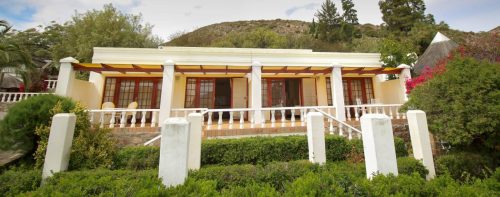
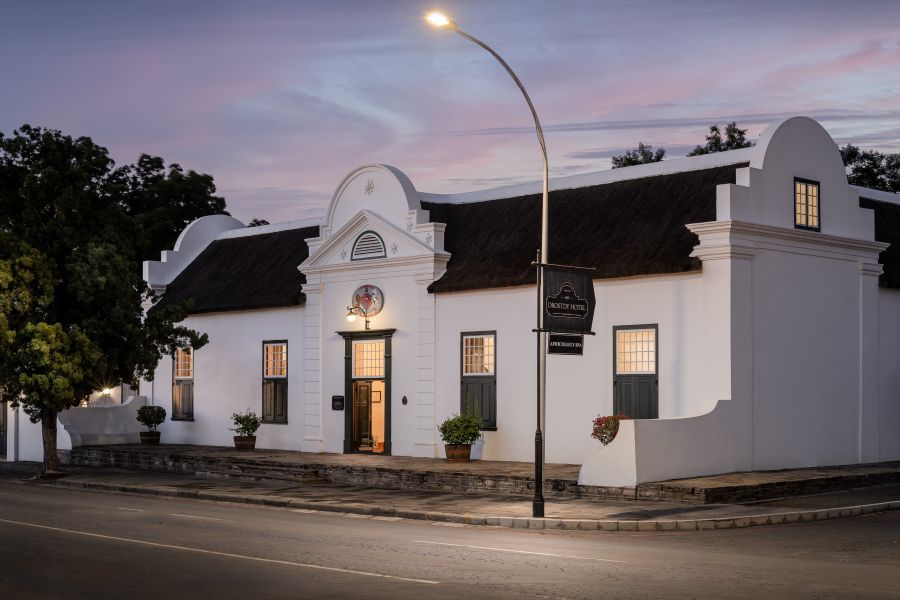
However, the slow adventure philosophy isn’t just about the sweat – it’s about the contrast. At the centre of this experience is Drostdy Hotel, the town’s sophisticated anchor, the ideal place for post-adventure recovery.
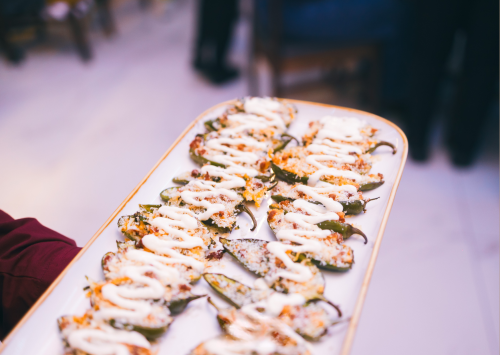
As Polisane-Casper notes, the modern adventurer seeks a balance between the wild and the refined. “They want to know that at the end of that journey, there is a world-class meal, a cold glass of South African wine, and a bed that understands the value of a long day’s effort,” she says.
By pairing the grit of the trail with the heritage of Drostdy, Robert Sobukwe has become the ultimate destination for the slow traveller. The beauty is in the simplicity – it is a place where you are compelled to stop, breathe, and appreciate that sometimes, the ultimate adventure is simply slowing down.
For more articles like this click here.
If you enjoyed this website then check out our other sites: Wedding and Function, Kids Connection, Thirsty Traveler, Boat Trips for Africa, Bargain Buys, Business Link.
Need help with your online marketing then visit Agency One.